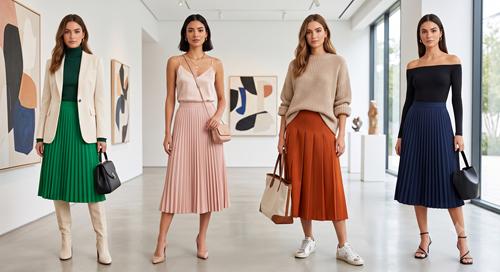
From the courts of ancient royalty to modern streetwear runways, the pleated skirt is a timeless fashion staple. It perfectly balances structure and movement, offering a silhouette that can swing from preppy and athletic to ultra-elegant in a single stride.
Whether you’re looking to buy your first one or want to breath new life into a wardrobe favorite, here is everything you need to know about the iconic pleated skirt.
You can check out some of the best pleated skirts to buy online.
What Exactly is a Pleated Skirt?
A pleated skirt is a type of skirt made with pleats—folds of fabric that are pressed or stitched into place to create texture, shape, and movement.
These folds can be narrow or wide, evenly spaced or varied, depending on the design.
When worn, the pleats open and close naturally as you walk, giving the skirt a graceful, flowing appearance.
Pleated skirts are available in a wide range of lengths, including mini, midi, and maxi, and are made from fabrics such as polyester, chiffon, satin, cotton, wool, and linen.
They can be worn for both casual and formal occasions, making them one of the most versatile wardrobe staples.
This style has remained popular for decades because it combines comfort with elegance.
A pleated skirt can be paired with T-shirts and sneakers for a relaxed daytime look or dressed up with a blouse, blazer, and heels for work, parties, or special events.
Whether you prefer classic knife pleats or bold accordion pleats, a pleated skirt adds movement, dimension, and timeless style to almost any outfit.
A Brief History: From Ancient Pharaohs to Pop Culture
Pleats weren’t always a quick fashion choice; historically, they were a status symbol.
- Ancient Beginnings: In ancient Egypt, Greece, and Rome, pleats were a luxury. Because fabric had to be pleated by hand and pressed with heavy stones, wearing pleated linen was a sign of immense wealth and royal status.
- The Fortuny Revolution: In the early 20th century, designer Mariano Fortuny patented a secret method to create permanently pleated silk, resulting in the famous, shimmering “Delphos gown.”
- The Mid-Century Boom: By the 1950s, the invention of synthetic fabrics allowed pleats to survive the washing machine without losing their crisp edge. The look quickly became synonymous with school uniforms, tennis stars, and mid-century housewives alike.
- Modern Day: Today, pleated skirts span every subculture—from the edgy grunge of the 90s to the high-fashion runways of Milan.
The Anatomy of a Pleat: Common Types
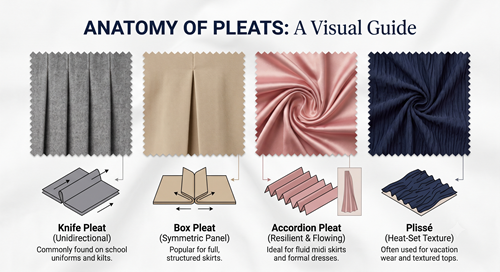
Not all pleats are created equal. The way the fabric is folded entirely changes the vibe of the skirt:
- Accordion Pleats: Narrow, evenly spaced pleats that flare out toward the hem. They resemble the bellows of an accordion and are most common in breezy midi skirts.
- Box Pleats: Formed when two folds of fabric face away from each other, creating a wide, rectangular panel on the outside. This gives the skirt a structured, voluminous shape.
- Knife Pleats: Flat, sharp pleats that all face in the same direction. This is the classic style seen on traditional school uniforms and tennis skirts.
- Plissé: Chemically treated fabric that creates a crinkled, puckered texture rather than distinct, sharp folds. It’s incredibly forgiving and travel-friendly.
The Best Fabrics for the Perfect Drape
The fabric dictates how the pleats behave. If the fabric is too heavy, the pleats bulk up; if it’s too flimsy, they unspool.
| Fabric Type | Best Used For | Why It Works |
| Polyester & Blends | Everyday & Athleisure | The absolute gold standard for pleats. Synthetics hold a heat-set crease almost permanently. |
| Silk & Satin | Evening & Formal Wear | Offers a gorgeous, fluid shimmer as the pleats catch the light moving. |
| Wool & Gabardine | Winter & Academic Styles | Excellent for heavy box or knife pleats, giving a structured, tailored look. |
| Faux Leather | Edgy & Modern Looks | Adds weight and a contemporary, sharp edge to the classic silhouette. |
Universal Appeal: Who Do They Suit?
Here is the short answer: Everyone.
Because pleated skirts come in varying lengths, fabrics, and pleat widths, they can be adapted to flatter any body type.
- For Curve Creation: A high-waisted A-line pleated skirt in a structured fabric can mimic or enhance an hourglass shape.
- For Elongating: Fine accordion pleats create continuous vertical lines, which naturally draw the eye up and down, creating a lengthening effect.
Pro Tip: Look for skirts where the pleats are stitched flat down over the hips and flare out lower. This prevents unwanted bulk around the midsection.
How to Style a Pleated Skirt
One of the biggest reasons pleated skirts have remained a wardrobe favorite for decades is their incredible versatility.
Whether you’re heading to the office, meeting friends for brunch, attending a dinner party, or simply running errands, a pleated skirt can easily be styled to suit the occasion.
By changing your top, shoes, and accessories, you can create looks that range from casual and comfortable to polished and elegant.
1. Casual & Effortless
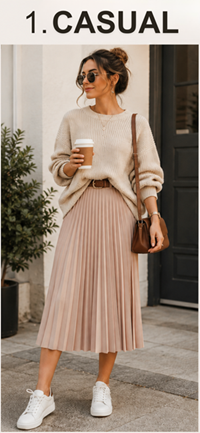
For an easy everyday look, pair a midi pleated skirt with an oversized knit sweater, a basic T-shirt, or a graphic tee.
A loose-fitting sweater creates a cozy, relaxed vibe that’s perfect for cooler weather, while a simple T-shirt keeps the outfit fresh and comfortable during warmer months.
To avoid looking bulky, try a French tuck by tucking just the front of your top into the waistband.
Complete the look with white sneakers, ballet flats, or ankle boots, depending on the season.
Finish with a crossbody bag and minimal jewelry for an effortlessly chic appearance that’s ideal for shopping trips, casual lunches, or weekend outings.
2. Office Chic
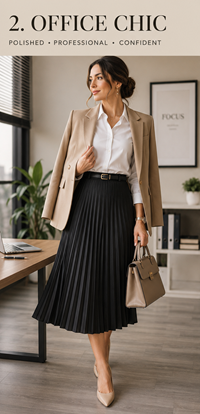
Pleated skirts are an excellent choice for professional settings because they strike the perfect balance between comfort and sophistication.
Choose a midi-length skirt in classic colors such as black, navy, grey, beige, or deep burgundy for a refined office look.
Pair it with a crisp button-down shirt, a fitted blouse, or a lightweight turtleneck tucked neatly into the skirt.
When it comes to footwear, loafers, pumps, block heels, or elegant ankle boots work beautifully.
Keep accessories simple with a structured handbag, delicate jewelry, and a classic watch. This combination is suitable for office meetings, presentations, business lunches, and formal work environments.
3. Evening Glamour
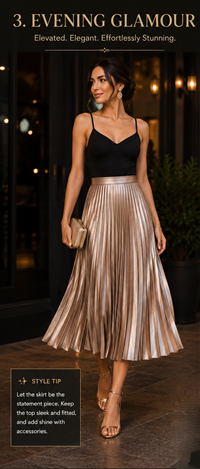
Pleated skirts can easily transition from day to night with a few styling changes.
Choose luxurious fabrics such as satin, silk, velvet, or metallic finishes to create a more elegant and eye-catching look.
Pair the satin skirt with a fitted bodysuit, a satin camisole, an off-the-shoulder top, or a stylish blouse.
Complete your evening look with strappy heels, pointed-toe pumps, or elegant sandals.
Add statement earrings, a clutch bag, and a bold lipstick to elevate the outfit further.
Whether you’re attending a dinner date, cocktail party, wedding reception, or festive celebration, a pleated skirt offers a graceful and sophisticated option.
4. Summer Fresh
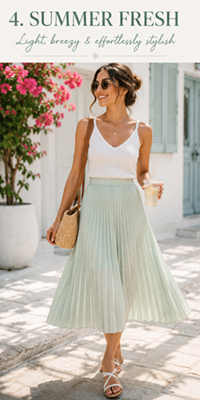
The best fabrics for summer, lightweight pleated skirts made from chiffon, cotton, or breathable synthetic blends are both stylish and comfortable.
Pair them with sleeveless tops, linen shirts, crop tops, or simple tank tops to stay cool while maintaining a polished look.
Light-colored skirts in shades like white, beige, pastel pink, mint green, or sky blue create a fresh seasonal appearance.
Complete the outfit with flat sandals, espadrilles, or white sneakers, along with sunglasses and a woven tote bag for a relaxed summer aesthetic.
5. Cozy Autumn & Winter Looks
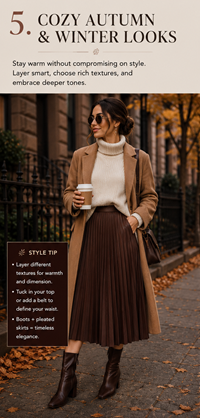
Pleated skirts aren’t just for spring and summer—they also work beautifully during colder seasons. Check out the beautiful brown pleated skirt for your look.
Pair a wool or thicker pleated skirt with a chunky knit sweater, fitted turtleneck, or long-sleeved top to create a warm yet stylish outfit.
Layer with a long coat, trench coat, leather jacket, or tailored blazer depending on the occasion.
Knee-high boots, ankle boots, or heeled boots pair particularly well with midi and maxi pleated skirts.
Add tights, a scarf, and a structured handbag to complete a sophisticated cold-weather ensemble.
6. Feminine Weekend Style
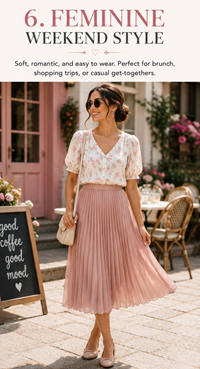
For weekend brunches, shopping trips, or casual gatherings, combine a floral or pastel pleated skirt with a soft blouse or puff-sleeve top.
Delicate accessories, ballet flats, or low block heels create a romantic and feminine look that’s comfortable enough for all-day wear.
A denim jacket can also be layered over the outfit for a more relaxed feel while adding texture and contrast.
Styling Tips
- Balance the volume of a pleated skirt with a fitted or partially tucked top.
- Midi-length pleated skirts are the most versatile and flatter many body types.
- Neutral-colored skirts are easier to style with multiple outfits and accessories.
- Belts can help define the waist and add visual interest.
- Choose shoes based on the occasion—sneakers for casual wear, loafers for work, and heels for formal events.
- Keep accessories simple when wearing metallic or heavily textured pleated skirts, allowing the skirt to remain the focal point of your outfit.
The Perfect Footwear Match
The shoes you choose completely dictate the vibe of the outfit.
- Sneakers: White leather sneakers instantly ground a pleated skirt, making it perfect for weekend brunches or running errands.
- Ankle Boots: A pointed-toe or chunky lug-sole boot adds a bit of edge to a soft, feminine skirt.
- Heels & Strappy Sandals: Perfect for elongating the legs when wearing a midi or maxi length, ideal for formal events.
- Loafers: Lean into the academic, “preppy” aesthetic by pairing a mini knife-pleat skirt with loafers and crew socks.
Common Mistakes to Avoid
- Buying the Wrong Size: If a pleated skirt is too tight, the pleats will pull open across your hips, distorting the pattern and silhouette. Always fit to your widest part.
- The Wrong Undergarments: Light, flowy pleated skirts can cling. Opt for seamless underwear or a slip to avoid static cling and visible lines.
- Ignoring the Hanger: Ironing individual pleats is a nightmare. Avoid crushing them in a crowded closet.
Longevity Guide: Care & Maintenance
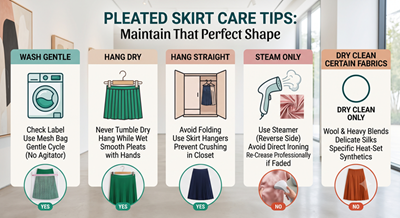
Pleats require a little extra respect to keep their sharp edges.
- Check the Label: Many synthetic pleated skirts are machine washable on a gentle cycle, but silk and wool varieties will require dry cleaning.
- Washing: If machine washing, place the skirt inside a mesh laundry bag to keep the pleats from getting tangled or pulled.
- Drying: Never tumble dry. Hang the skirt by the waistband using a clip hanger, smoothing the pleats down with your hands while wet.
- Steaming vs. Ironing: Avoid traditional ironing, which can flatten the pleats or create awkward double-creases. Instead, use a garment steamer from the inside out to release wrinkles.
Frequently Asked Questions
Q1: Do pleated skirts make you look bigger?
A: Not if you choose the right style. Lightweight fabrics like polyester or satin with fine accordion pleats flow downward rather than adding bulk. Look for styles with a flat waistband rather than an elastic, gathered one.
Q2: Can you re-pleat a skirt if it loses its shape?
A: If it’s a synthetic fabric like polyester, the pleats are usually baked in with heat and won’t completely disappear. If they do fade, a professional dry cleaner can often re-press them. Trying to do it at home with an iron takes an immense amount of patience and pinning.
Q3: Are pleated skirts in style currently?
A: Absolutely. The pleated skirt has officially transitioned from a trend to a timeless wardrobe capsule piece. Current styling leans toward mixing textures—like pairing a leather pleated mini with an oversized knit, or a satin midi with a casual denim jacket.